
 Recommend
 Print
Print
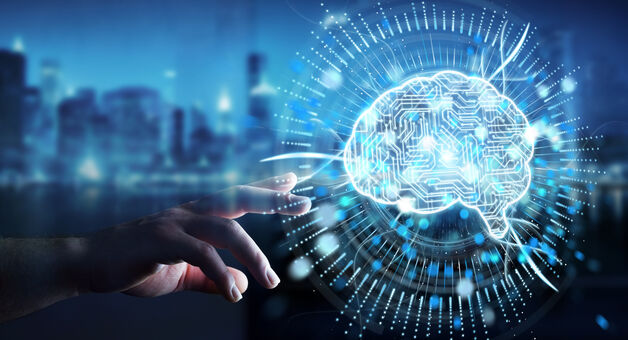
The topic of artificial intelligence (AI) is a central component of digitalisation and touches on a variety of societal, political and social aspects. It ranges from intelligent robots to devices and products capable of learning. The basis for all of this is the ability of AI to process information of all kinds - such as voice and gesture control or other data - and react intelligently to it. This results in numerous revolutionary possibilities for inventions that will shape the life of tomorrow.
Expectations for the potential of AI are correspondingly high; for example, AI can help people to complete their tasks and activities more quickly, easily and playfully. In fact, AI technologies are already being used in various areas of application, such as smart home applications of all kinds or VR technologies in the gaming industry.
However, there is still a great deal of scepticism towards such industrial innovations. So what can we expect from intelligent systems and the impact of AI on our lives?
Artificial intelligence - an attempt at a definition
Even the definition of the term "artificial intelligence" is difficult, as it is not easy to come up with a clear definition. In practice, a system with AI is expected to come as close as possible to the behaviour that characterises beings with natural intelligence, such as humans. The following abilities are important here: perception of the environment, processing these impressions and, based on this, making decisions, interacting with the environment and solving problems. The ability to learn independently from the consequences of its own decisions and actions is also key. This is precisely what distinguishes AI systems from previous inventions.
Wide range of possible applications for AI
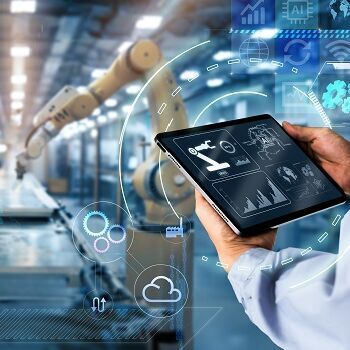
Well-known application examples of AI technologies include new app technologies that serve as assistance systems with intelligent voice and gesture control. One example of this is ambient assisted living. This includes systems, products and services that support the everyday lives of older and disadvantaged people. For example, by taking over household tasks by voice command or ensuring basic medical care. There are also numerous conceivable possibilities for the use of AI in the smart home sector: For example, intelligent systems can network and control heating, shutters and all technical devices in the home. One of the best-known applications in industry is predictive maintenance, i.e. the prediction and prevention of failures in production facilities or intelligent robotic systems.

Limits and challenges of AI
One hurdle to the full application of AI systems is technical feasibility, as today's systems can usually only react to completely new situations and changing requirements with severe limitations. In addition, not all decisions made by intelligent systems are yet comprehensible. This makes it difficult, for example, to determine why a system has made the wrong decision. The current research and development trend is therefore moving in the direction of deriving decision paths from the recognised patterns and process information that are comprehensible to humans.
There are also still some concerns about AI systems. The fear that jobs will disappear and activities will be completely taken over by machines and robots puts off large sections of the population. However, AI systems should be interpreted much more as intelligent assistance systems for humans and less as cannibalising technology. Politics, business and science have a duty to communicate the benefits, opportunities and potential of AI.
Even if various challenges still need to be overcome, AI is likely to have a significant impact on the future. AI should therefore be seen as a great opportunity for industry, business and society and should be proactively shaped.


Starting point
Technologiepark Heidelberg GmbH
Das KI Lab Heidelberg beschleunigt den Einsatz von KI in Unternehmen. Wie? Durch einsatzbereite Lösungen von KI-Startups. Das Ziel: ein funktionierender KI-Prototyp für Unternehmen in nur fünf Wochen.
Paul Becker
Leitung KI Lab Heidelberg
Starting point
KI-Lab AnalyzES!
AnalyzES! ist ein vom Land Baden-Württemberg gefördertes Digitalisierungsprojekt der Hochschule Esslingen zur Technologieförderung von kleinen und mittleren Unternehmen. Durch unsere Angebote möchten wir einen niederschwelligen Zugang zu Künstlicher Intelligenz ermöglichen und Unternehmen die Möglichkeit geben erste Hands-On Erfahrungen mit Künstlicher Intelligenz zu sammeln. Gleichzeitig haben wir es uns zur Aufgabe gemacht die KI-Experten von morgen auszubilden, indem wir Studierende und Unternehmen zusammenbringen.
Prof. Dr. Dorothee Brauner

Starting point
KI-LAB Region Stuttgart
Der mehrstufige Beratungsprogramm vermittelt praxisnahe Vorgehensweisen zu KI-Vorhaben und bündeln unser KI-Know-how aus Forschung, Beratung und Praxis. Für kleine und mittlere Unternehmen (KMU) sowie Start-ups stellen wir eine zentrale niedrigschwellige Anlaufstelle in KI-Fragen dar. Für den KI-Schnellstart bieten wir eine kostenlose ‚Artificial-Intelligence-Readiness-(AIR)-Analyse‘ sowie Trainings und Workshops zur Orientierung an. Zudem unterstützt das KI-Lab bei konkreten KI-Vorhaben und Pilotprojekten.
Christine Schaller

Starting point
KI-Lab Allgäu-Oberschwaben
Viele Unternehmen wissen nicht, wie sie KI für ihr Unternehmen einsetzen können und sind überfordert von zu vielen Möglichkeiten. Das KI-Lab Allgäu-Oberschwaben vermittelt praxisnahes KI-Wissen und Vorgehensweisen, damit jedes Unternehmen von KI profitieren kann.
Thomas J Buck
88299 Leutkirch im Allgäu
 +49 151 4286 2711
 tjb@digitales-zukunftszentrum.de
 Website

Starting point
MedicalMountains GmbH
KIM-Labs öffnet „Türen“ zu Kompetenzen und Partnern, verbindet interdisziplinäre Teams in einem regionalen KI-Ökosystem und etabliert KI in den Wertschöpfungsketten. Entsprechend der Zielsetzung “Information, Erprobung, Unterstützung und Vernetzung” umfasst KIM-Labs Maßnahmen wie Informationsveranstaltungen, Beratungstage, Test before invest und Awareness-Schulungen. Die beteiligten Partner bieten mit ihren Strukturen und Netzwerken der breitgefächerten KMU-Landschaft einen unmittelbaren Zugang zu KI-Know-how und dessen Transfer in die Unternehmenspraxis.
Britta Norwat
KIM-Labs
Starting point
DIZ I Digitales Innovationszentrum
KI-Transfer BW unterstützt die regionalen KI-Labs dabei künstliche Intelligenz in die Fläche von Baden-Württemberg zu bringen.
Alexander Dregger
Projekt KI-Transfer BW
Starting point
S-TEC Stuttgarter Technologie- und Innovationscampus
Der Stuttgarter Technologie- und Innovationscampus S-TEC vernetzt Unternehmen mit der thematisch breit gefächerten Forschungslandschaft am Standort Stuttgart und treibt zukunftsrelevante Forschungsthemen voran. Inhaltlich sind diese Themen wie additive Produktion, cybercognitive Intelligence, cyberphysische Systeme, digitalisierte Batteriezellenproduktion sowie frugaler Produkte und Produktionssysteme, in Zentren organisiert. In den Zentren können Unternehmen in verschiedenen Projektformaten und Kooperationen in S-TEC zusammenarbeiten.
In einer interdisziplinären und systematischen Kooperation von Wirtschaft, Wissenschaft und Politik setzt S-TEC zentrale Innovations- und Transferinstrumente um: Leuchtturmforschung, Industry on Campus, Gründungen und Aus- und Weiterbildung.
Dr. Kai Kohler

Starting point
CyberForum e.V.
Das CyberForum e.V. ist mit über 1.100 Mitgliedern das größte regional aktive Hightech.Unternehmer.Netzwerk. in Europa. Im CyberForum vernetzen sich Unternehmer, Gründer, Kreative, Mitarbeiter aus Forschungseinrichtungen und Institutionen, Studierende, Business Angels und Auszubildende. Insgesamt repräsentieren die Mitglieder über 26.000 Arbeitsplätze. 2013 wurde das CyberForum als erfolgreichstes Cluster landesweit und als das führende IT-Netzwerk in Europa ausgezeichnet.
David Hermanns
Geschäftsführer
Service offers
More service offersInformation and advice on the topic of artificial intelligence.
Weitere Informationen zur Lernfabrik 4.0 Bietigheim-Bissingen finden Sie hier.
Den Film finden Sie hier.
Promotion programs
More promotion programsFunding opportunities for measures in the field of artificial intelligence.
Um dies zu erreichen, identifizierte die EU-Kommission fünf Handlungsfelder in ihrem Digital Europe Programme: Künstliche Intelligenz und Datenwirtschaft, Hochleistungsrechner, Cybersicherheit, Fortgeschrittene digitale Kompetenzen, Breiter Einsatz digitaler Technologien in Wirtschaft und Gesellschaft.
Weitere Informationen:
Digital Europe Programme | Shaping Europe’s digital future (europa.eu)/
Cybersicherheit im Digital Europe Programme
Bundesministerium für Digitales und Verkehr - Bundesministerium für Digitales und Verkehr
digital-europe@bmdv.bund.de
Ansprechpartner Cybersicherheit
Stefan Hillesheim
+49 228 3821 2230
stefan.hillesheim@dlr.de
Dr. Marvin Richter
+49 228 3821 2147
marvin.richter@dlr.de
Dr. Alexander Khanin
+49 228 3821 2667
alexander.khanin@dlr.de
Ansprechpartner im Land u.a. EDIH, Enterprise Europe Network
steinbeis-europa.de/de/foerderungen/digital-europe-programme
enterprise-europe-bw.de/ueber-uns/ansprechpartner/
Hanna Schaefer
Steinbeis Europa Zentrum
hanna.schaefer@steinbeis-europa.de +4971125242035
Der EIC vergibt jährlich 3 Mal jeweils 100.000 Euro an inspirierende Gründerinnen innovativer Unternehmen. Zusätzlich wird jährlich eine Gründerin, die maximal 30 Jahre alt ist, als „Rising Innovator“ mit 50.000 Euro ausgezeichnet. Zur Bewerbung muss ein Antrag bestehend aus einem Fragebogen und einem Video eingereicht werden, die darüber ausgewählten Semi-Finalistinnen müssen sich darüber hinaus im persönlichen Interview vor einer Jury beweisen. Die Deadlines für die Bewerbung entnehmen Sie bitte der offiziellen Webseite des Preises der EU.
Start-ups und KMU aus Baden-Württemberg erhalten Informationen und Unterstützung für Anträge. Weitere Hinweise finden der Webseite ="http://www.innocheck-bw.de">www.innocheck-bw.de des Unterstützungsprojekts für Start-ups und KMU beim Steinbeis Europa Zentrum, gefördert durch das Ministerium für Wirtschaft, Arbeit und Tourismus Baden-Württemberg. Weiterführende Informationen entnehmen Sie bitte ebenfalls der Webseite des Unterstützungsprojekts.
Ziel dieses Förderprogramms ist die Weiterentwicklung von Ideen aus bereits bestehenden EU-geförderten Projekten. Notwendig ist ein Vorprojekt aus den Förderprogrammen „EIC Pathfinder“, „FET“ oder „ERC Proof of Concept“, in dem die Realisierbarkeit einer bahnbrechenden Technologie im Labor nachgewiesen wurde (Technologiereifegrad 3). Von diesem ausgehend soll die Marktreife erhöht und ein Demonstrator in relevanten Einsatzumgebungen entwickelt werden. Anträge können allein oder in Konsortien aus 2 bis 5 Mitgliedern gestellt werden.
Es gibt themenoffene Aufrufe (Transition Open) und auf bestimmte Herausforderungen fokussierte Aufrufe (Transition Challenges). Hilfe und Hinweise finden Sie in den FAQ der Webseite www.innocheck-bw.de des Unterstützungsprojekts für Start-ups und KMU beim Steinbeis Europa Zentrum, gefördert durch das Ministerium für Wirtschaft, Arbeit und Tourismus Baden-Württemberg. Weiterführende Informationen entnehmen Sie bitte ebenfalls der Webseite des Unterstützungsprojekts.
Calls u.a. www.steinbeis-europa.de/de/leistungen/eu-foerderung
Über einen Innovationsgutschein förderfähig sind zum Beispiel Recherchen und Machbarkeitsstudien, Material- oder Designuntersuchungen oder auch der Bau von Prototypen und Tests zur Sicherstellung von Qualität oder Umweltverträglichkeit. Anders als bisher gibt es nicht mehr fünf, sondern nur noch drei Gutscheinlinien: Innovationsgutschein BW (maximal 7.500 Euro Zuschuss bei einem Fördersatz von 50 Prozent), Innovationsgutschein Hightech BW (maximal 20.000 Euro Zuschuss bei einem Fördersatz von 50 Prozent), Innovationsgutschein Start-up BW (maximal 20.000 Euro Zuschuss bei einem Fördersatz von 50 Prozent).
Educational offers
More educational offersFurther training opportunities for employees and entrepreneurs on the topic of artificial intelligence.
Eingerichtet an beruflichen Schulen dienen sie in erster Linie der Vorbereitung von Fach- und Nachwuchskräften auf die Anforderungen der Industrie 4.0, indem sie Auszubildende und Teilnehmer an Weiterbildungskursen an die Bedienung von Anlagen auf Basis realer Industriestandards heranführen. Die Lernfabriken helfen dabei, das abstrakte Konzept von Industrie 4.0 für Nachwuchskräfte und Beschäftigte greifbar zu machen.
Studies
More studiesPublications and studies on digitalisation topics in the field of artificial intelligence.
Künstliche Intelligenz hat die Forschungslabore verlassen und durchdringt atemberaubend schnell Alltag und Arbeitswelt in Form sprechender Geräte und digitaler Assistenten, kooperativer Roboter, autonomer Fahrzeuge und Drohnen. Das Smart Data Forum machte Ergebnisse aus der deutschen und internationalen Spitzenforschung für den Mittelstand leicht zugänglich und hilft bei der erfolgreichen Umsetzung innovativer Digitalisierungskonzepte und Technologien in der unternehmerischen Praxis.
Beispiele aus neun Einsatzbereiche werden vorgestellt und abhängig von der Aufgabe und den verarbeiteten Daten weiter untergliedert. Der Beispielsammlung vorangestellt sind ein kurzer Abriss zur Geschichte der Künstlichen Intelligenz, die wichtigsten Konzepte des Maschinellen Lernens als aktuelle Schlüsseltechnologie für intelligente Lösungen und ein Ausblick auf Trends in der Forschung.
Die präsentierten Ergebnisse basieren außerdem auf weiteren, bei Fraunhofer im Jahr 2017 beauftragten Analysen des Marktes, des Forschungsgebietes und der Ausbildungssituation.
Bereits heute gelten HMI als Aushängeschild und Treiber für positive Nutzererlebnisse und stellen als fester Bestandteil des Maschinendesigns einen wesentlichen Wettbewerbsfaktor dar. Viele kleine und mittlere Unternehmen (KMU) stehen bei der konsequenten Ausrichtung ihrer Prozesse, Produkte und Geschäftsmodelle an die Bedingungen einer vernetzten digitalen Welt jedoch vor großen Herausforderungen.
Die vorliegende Studie ist Teil einer Studienreihe des Business Innovation Engineering Centers (BIEC) und unterstützt Unternehmen – insbesondere KMU – bei der Entwicklung von HMI. Dabei können Entwickler auf verschiedene digitale Werkzeuge zurückgreifen, aus welchen es das für einen konkreten Anwendungsfall Passende zu wählen gilt. Die Studie bietet Entscheidern und Entwicklern dazu zunächst einen Überblick über den aktuellen Stand von am Markt erhältlichen HMI-Lösungen. Darüber hinaus werden konkrete Entscheidungskriterien vorgestellt, praxisrelevantes Wissen zur Gestaltung von Nutzererlebnissen vermittelt und so eine systematische Orientierungshilfe beim Design- und Entwicklungsprozess gegeben.
Jeder kennt das »Periodensystem der Elemente« aus dem Chemieunterricht. Das Periodensystem ist ein intuitiver und schneller »Lego-Baukasten«, der uns unterstützt, komplizierte Zusammenhänge zwischen Bausteinen (Atomen) und Molekülen (Naturstoffe, Steine oder Metalle) intellektuell zu erfassen.
Der amerikanische Informatiker Kristian Hammond hat den Versuch unternommen, eine Lingua Franca für künstliche Intelligenz zu konzipieren. In Anlehnung an die Chemie bezeichnet er sie als »Periodensystem der Künstlichen Intelligenz«. Das Periodensystem der Künstlichen Intelligenz unterstützt dabei, den Begriff KI auf Geschäftsprozesse abzubilden und ein Verständnis der Elemente aufzubauen – ähnlich wie im Periodensystem der chemischen Elemente. Der Ansatz hilft beim Verständnis und bei der Einschätzung von Marktreife, Aufwänden, benötigtem Maschinentraining sowie Wissen und Erfahrungen der Mitarbeiter.
Die Studie stellt die wichtigsten Konzepte und Methoden des Maschinellen Lernens vor, gibt einen Überblick über Herasuforderungen der Technologie und zeigt neue Forschungsfelder auf. Außerdem wird der Standort Deustchland näher vorgestellt, indem Rahmenbedingungen sowie relevante Märkte und Branchen thematisiert werden.
Digitalisierung in Zahlen! Der Monitoring-Report Wirtschaft DIGITAL 2018 des Bundes-wirtschaftministeriums liefert einen umfassenden Überblick über die Digitalisierung der deutschen Wirtschaft.
Dabei wird anhand der Zahlen zwischen 0 und 100 angegeben, weit die Digitalisierung in der gesamten deutschen Wirtschaft sowie in unterschiedlichen Branchen, Teilbereichen und Unternehmensgrößen fortgeschritten ist, und wie sie voraussichtlich sich bis 2023 verändern wird. Von zentraler Bedeutung sind dabei folgende drei Themen: Die Nutzung digitaler Geräte, der unternehmensinterne Digitalisierungsgrad sowie die Auswirkungen der Digitalisierung auf die Unternehmen.
Über den Index hinaus identifiziert der Bericht auch aktuelle Trends und Herausforderungen für die Wirtschaft. Schwerpunktthema dieser Ausgabe ist die Nutzung Künstlicher Intelligenz. Grundlage für den Index ist die Befragung hochrangiger Entscheider aus 1.061 Unternehmen in Deutschland.
