 Recommend
 Print
Print
Baden-Württemberg's companies in the metaverse
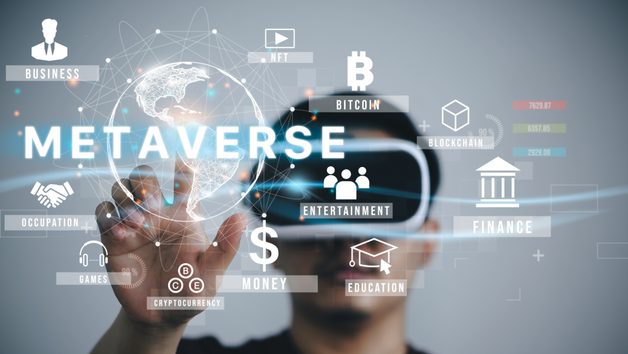
In the metaverse, physical and virtual worlds are to be brought together in three-dimensional space, thereby enabling new forms of social interaction and economic transactions. This could give rise to innovative business models and new forms of collaborative value creation. Experts predict considerable potential for the German economy, particularly in the mechanical engineering and automotive industries, but also in the energy, healthcare, logistics and construction sectors.
The metaverse does not yet exist, but there are already numerous practical examples that demonstrate the potential for companies and illustrate that it is already worthwhile for small and medium-sized enterprises to get started: for example, companies can use metaverse-relevant technologies to expand their business models or make them more innovative and optimise business processes and resource deployment.

Opportunities and risks
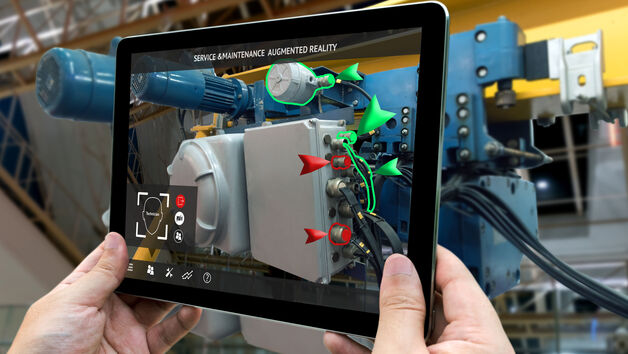
Current approaches by key technologists such as blockchain, IoT and robotics, digital twins, mobile working and virtual reality and augmented reality marketing can improve productivity, reduce costs and risks and lower resource consumption. Examples of this include cost and risk reduction in the construction industry, improved marketing in the hotel and tourism sector and product and service innovation in the manufacturing industry.
However, there are also challenges. The most frequently cited are the unclear benefits of implementing specific projects, the lack of expertise and skilled labour and immature technologies. At the same time, companies must first invest in the necessary technology and infrastructure in order to realise the potential of the metaverse.
Potential of the metaverse for companies from Baden-Württemberg
It is not only big tech companies that will drive further developments on the road to the metaverse; new business areas will also emerge for medium-sized companies. Industrial processes, the production of business software and the development of immersive technologies will also play a key role - business areas that are also among Baden-Württemberg's strengths.
As part of the "CyberLänd" project sponsored by the Ministry of Economic Affairs, over 1000 companies are listed in the Competence Atlas. Part of the platform is a 3D gallery in which specific applications are presented and users and providers of metaverse-relevant technologies can showcase and network with each other. The spectrum of companies listed ranges from start-ups and small and medium-sized enterprises to internationally active companies.
CyberLänd offers a concrete space for exchange, co-creation and knowledge transfer between Baden-Württemberg's (creative) economy, research and administration. The dissemination of the community portal is a prerequisite for Baden-Württemberg and its companies to be visible, networked, strong in implementation and willing to cooperate as a leading region in the field of metaverse.
You can find the CyberLänd community portal here.
Support for companies
The CyberLänd project, which has been running since 2023, forms the basis for the state's further approach to the metaverse. For example, a competence atlas for network formation was created, which makes it easier for companies to identify cooperation partners for developments in and around the metaverse. In addition, a white paper for small and medium-sized enterprises entering the metaverse ("Making the metaverse easy!") was published as part of the project, which was supplemented in May 2025 by a strategy white paper entitled "CyberLÄND - Strategiepapier zum Metaverse-Ökosystem des Landes Baden-Württemberg".
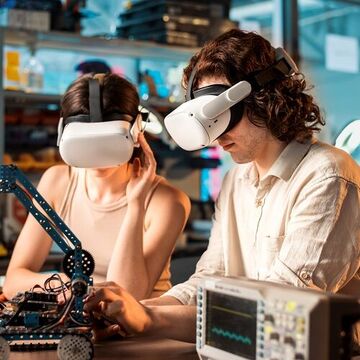
On 8 May 2025, the Baden-Württemberg Ministry of Economic Affairs was the first federal state toorganisethe all-day congress "Virtual worlds - experiencing opportunities in the metaverse" and a trade fair with excitinguse cases forthe first time with a large number of partnersin order to make the potential of the metaverse for the economy even better known. The topic will continue to be made accessible to the public. A wide range of support is available to companies for this purpose, including the nationwide network of digital hubs. For many years, the Virtual Dimension Centre (VDC) Fellbach has also beensupporting companies with theintroduction of immersive technologies such as virtual reality and augmented reality.